Solar panels for your business
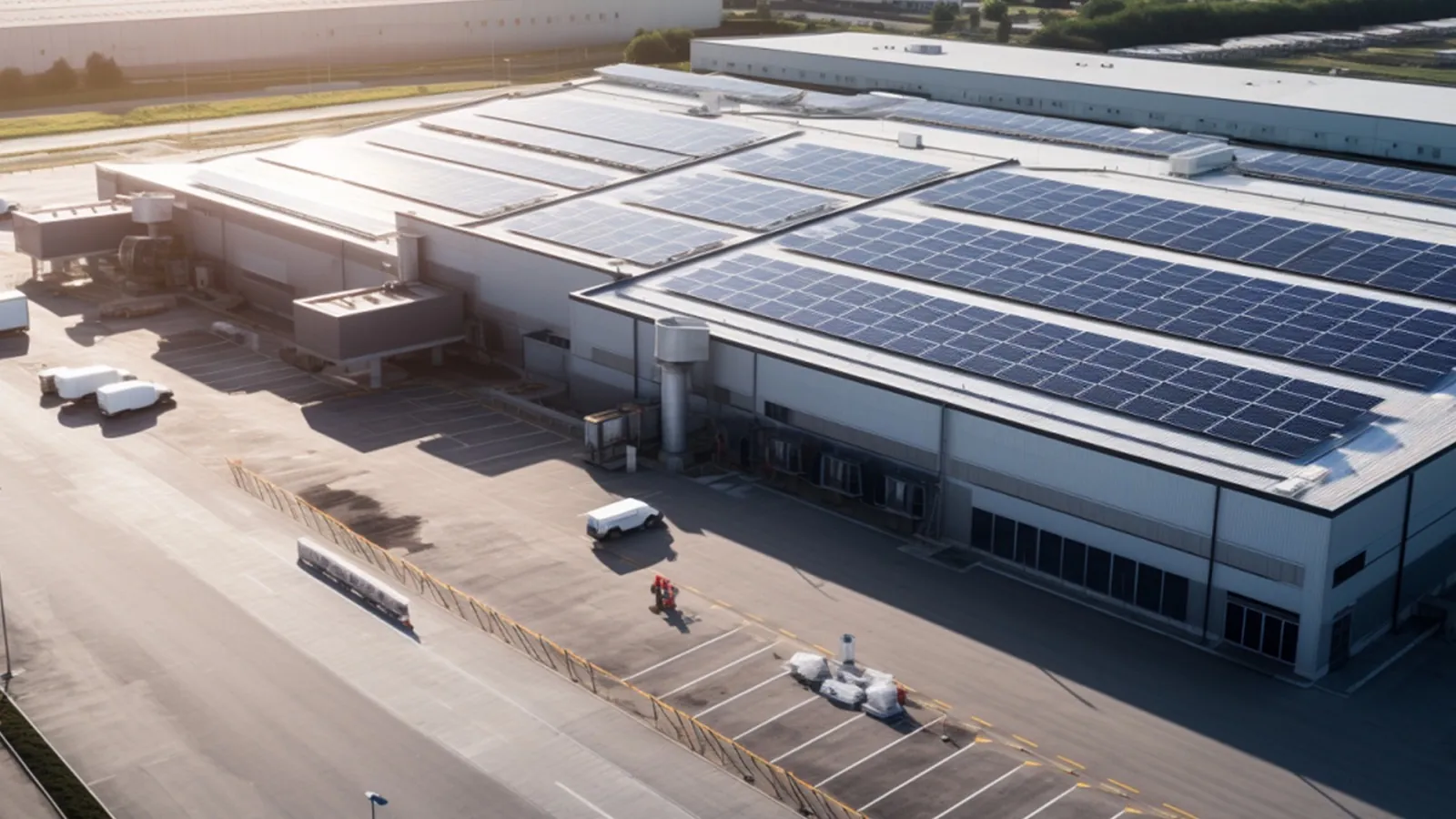
We install commercial and industrial PV systems throughout Romania, exclusively from 50 kW upwards (including exactly 50 kW).
Advice on installing your system
Our on-site consultation helps you choose a suitable PV solution for your property, with the information you need to make a considered decision.
1. How it works
- ✓First contact: call, email or message us on WhatsApp and describe your project.
- ✓Initial review: a consultant reviews your consumption profile, site and investment objectives.
- ✓Site visit: our consultants assess the site and recommend an appropriate PV installation approach.
2. What to prepare
Consumption · site · objectivesYour consumption profile or recent bills, connection details and roof or land information help us develop a realistic solution.
3. Next step
After the initial discussion, we establish whether the information is sufficient or a site assessment is needed. Our team confirms the details directly.
You receive a recommendation based on consumption and actual site conditions, with clear explanations of equipment and project stages.
Talk to a consultant →Which equipment do we work with?
We work with established brands for panels, inverters, batteries and premium mounting structures.
Solar panels
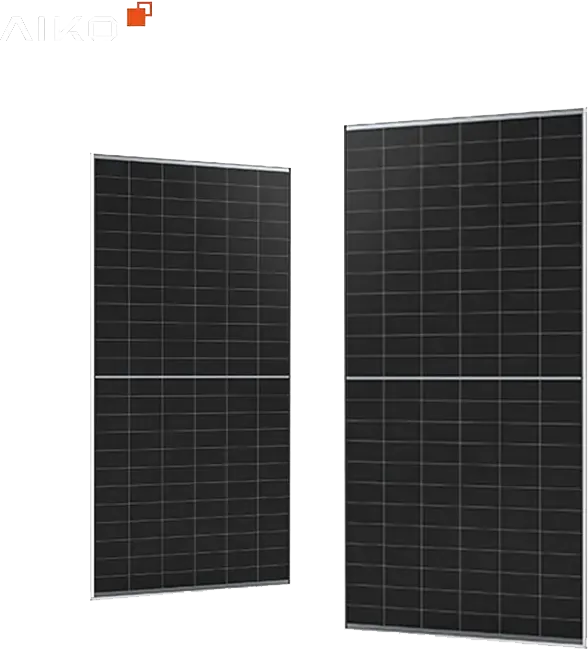
AIKO N-TYPE 460 W monocrystalline panels
About the brand: AIKO Solar develops photovoltaic technology with a strong focus on research and development. Its cell technology supports high module efficiency and continued development of solar energy products.
Dimensions: 1722 × 1134 × 30 mm for configurations on metal or tiled roofs; 2278 × 1134 × 35 mm for ground-mounted configurations. Confirm the dimensions of the selected model.
Technology and efficiency: AIKO uses monocrystalline N-type cell technology. For the 460 W panel shown here, use the stated 23.3% efficiency and confirm the exact model's datasheet when selecting equipment.
Warranties: 15-year product warranty and 30-year performance warranty, subject to the model's warranty terms.
Our recommendation: we recommend assessing the AIKO 460 W panel with a Fronius or Huawei inverter for single-phase or three-phase PV systems.
Value for money: AIKO 460 W combines high performance and durability with competitive value.
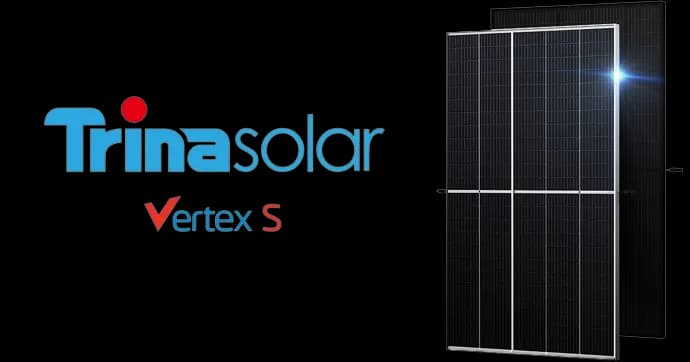
TRINA N-TYPE 440 W monocrystalline panels
About the brand: Founded in 1997, Trina Solar is a global photovoltaic manufacturer. Its research and development focuses on solar system efficiency and performance, with an established range of modules for long-term use.
Dimensions: 1760 × 1134 × 30 mm — compact dimensions for straightforward integration into suitable designs and configurations.
Technology: The Trina 440 W panel has a stated efficiency of 22% and uses monocrystalline N-type cells.
Our recommendation: Trina 440 W can be considered for single-phase and three-phase PV systems with a Fronius or Huawei inverter, subject to system design.
Long-term equipment choice: Trina 440 W offers performance and durability for appropriately designed solar energy projects.
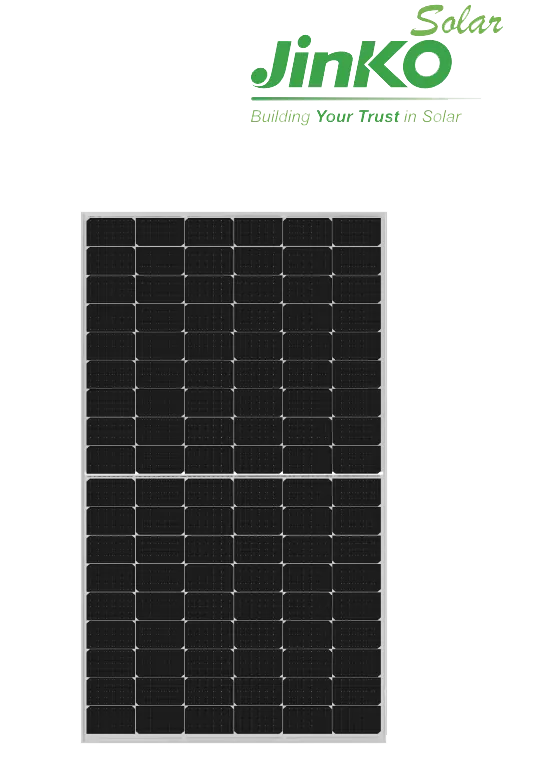
Jinko N-TYPE 480 W monocrystalline panels
About the brand: Jinko Solar is a major global solar panel manufacturer, with an established international presence and a focus on product development, reliability and durability.
Dimensions: 1903 × 1134 × 30 mm — dimensions that support flexible PV system design.
Technology: the Jinko 480 W panel uses monocrystalline N-type cells, incorporating developments in solar cell technology.
Industry experience: Jinko Solar develops products with a focus on quality and innovation. Its 480 W panel is designed for durable, efficient solar installations.
Our recommendation: we recommend assessing the Jinko 480 W panel with a Fronius inverter for single-phase systems or a Huawei inverter for three-phase installations, subject to electrical compatibility.
Innovation and reliability: the Jinko 480 W panel is an option for customers seeking performance and long-term reliability, subject to the specified operating and warranty conditions.
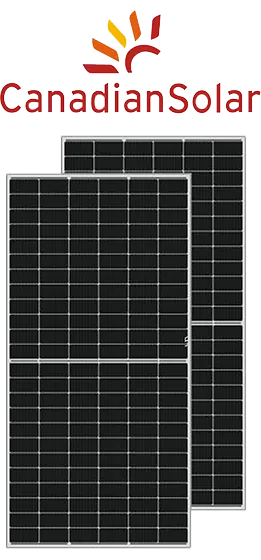
Canadian Solar P-TYPE monocrystalline panels
About the brand: Canadian Solar has more than two decades of solar industry experience, supplying products for households and businesses worldwide with a focus on quality, development and affordability.
Dimensions: 1903 × 1134 × 30 mm — suitable for a range of appropriately designed installations.
Technology and efficiency: the P-type monocrystalline panel described here has a stated efficiency of 21.1%, offering a cost-conscious equipment option. Actual generation depends on the installation and operating conditions.
Cost and performance: this Canadian Solar P-type panel offers a balance between cost and performance for customers seeking a lower-priced alternative to N-type modules.
Our recommendation: for a limited budget, Canadian Solar is worth considering with Fronius in single-phase or three-phase systems, or Huawei in three-phase systems. Final selection depends on electrical compatibility and project requirements.
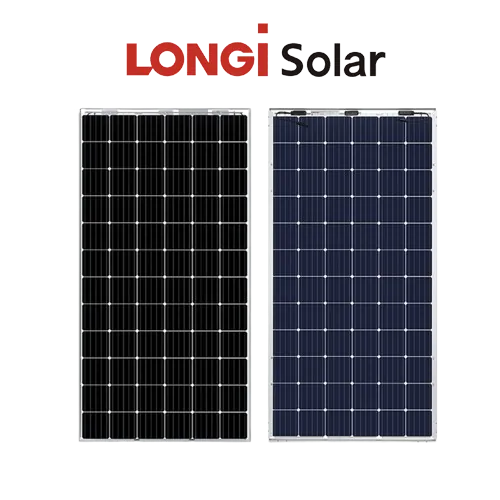
LONGi Solar P-TYPE monocrystalline panels
About the brand: founded in 2000, LONGi Solar is a global solar manufacturer with a strong focus on research, development and reliable equipment.
Dimensions: 2094 × 1134 × 35 mm — for integration into appropriately designed installations.
Technology and efficiency: the LONGi 500 W panel uses P-type monocrystalline technology. Use the stated 21% figure for this comparison and confirm the exact model's efficiency in its datasheet; energy yield depends on site conditions.
Cost and performance: LONGi Solar panels combine performance with competitive pricing, making them an option for cost-conscious projects.
Our recommendation: the LONGi 500 W panel can be assessed with Fronius and Huawei inverters for suitable single-phase or three-phase systems. Confirm the exact equipment pairing in the design.
Inverters
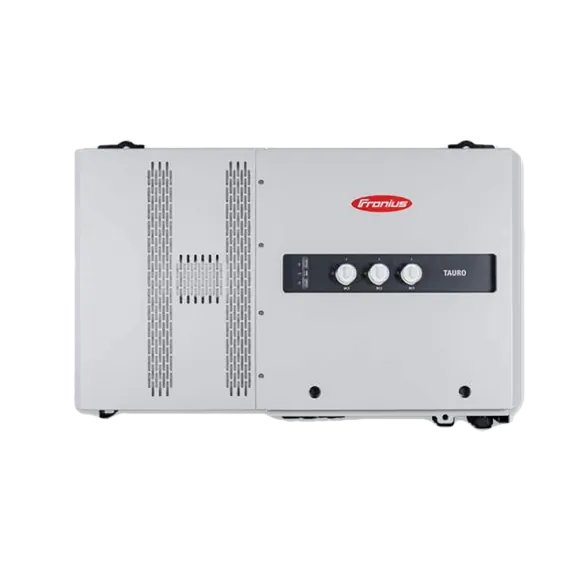
Fronius inverter
About the brand: Founded in Austria in 1945, Fronius is an established inverter manufacturer known for product development, quality and durability.
Technology and efficiency: Fronius grid-connected inverters are designed for efficient solar conversion. The hybrid GEN24 Plus range can integrate compatible BYD batteries, subject to the selected models and system design.
Panel compatibility: Fronius inverters can be used with a wide range of PV panels. String voltage, current and the selected inverter's limits must be checked for each configuration.
PV Point: PV Point provides a dedicated backup output for selected essential loads. On suitable models, it can supply up to 3 kW when sufficient solar power is available, including during a grid outage without a battery. Operation depends on the model and electrical design.
Cooling: Fronius inverters use active cooling to manage operating temperature and support equipment performance.
Response to changing sunlight: Inverter response affects how a system follows changing sunlight. Fronius is designed to respond promptly to these changes; actual generation depends on the complete installation and conditions. No specific increase in yield is guaranteed.
Service partnership: we are certified Fronius service partners, providing technical support, maintenance and assistance with interventions.
Extended warranty: eligible Fronius models can receive up to 10 years under the applicable registration terms. Further extensions depend on the model and current offer; confirm coverage in the warranty certificate.
Considerations: Fronius is a premium option with a potentially higher initial cost. Some settings, such as grid export configuration, may require an on-site visit for the system described here; that service is included in the price. Actual generation and payback depend on the project.
Our recommendation: Consider Fronius for a premium system with appropriate efficiency and backup features such as PV Point. We select the grid-connected or GEN24 Plus model according to the project's requirements.
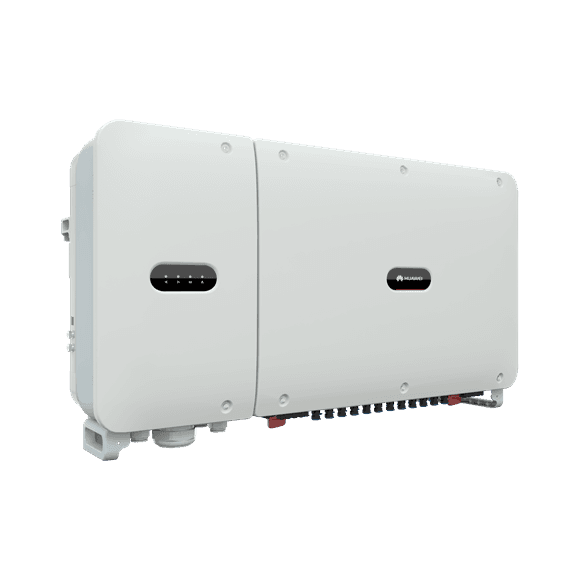
Huawei inverter
About the brand: Huawei develops communications and solar energy technology, with substantial investment in research and development. Its solar products combine control features, integration and competitive pricing.
Technology and efficiency: Huawei's hybrid models support compatible battery integration and later expansion. Functions and compatibility must be confirmed for the selected inverter and battery.
Value: Huawei offers a balance of features and cost for projects with a defined budget.
Design flexibility: Compatible panel-level optimisers can support designs with several roof orientations or partial shading and provide model-specific safety functions. Any generation benefit depends on the layout and conditions; no percentage increase is guaranteed.
Hybrid design: compatible Huawei hybrid models allow batteries to be added when required, subject to model and system compatibility.
Integrated protection: in addition to the inverter's surge protection, we specify additional protection appropriate to the installation.
Warranty: a 10-year term applies to the specified models under the relevant warranty policy and certificate.
Considerations: Operating temperature — temperature and ventilation need to be considered when selecting and monitoring the installation location. Backup limitations — backup phases and output depend on the inverter, battery and backup equipment. The single-phase backup arrangement described here must not be assumed to apply to every Huawei model. Grid dependency — backup is not available from the configuration described here without a compatible battery and the required backup equipment.
Our recommendation: Huawei is an option for projects seeking a balance between cost, integration and performance, including layouts that benefit from compatible optimisers. We assess its features and limitations against the project.
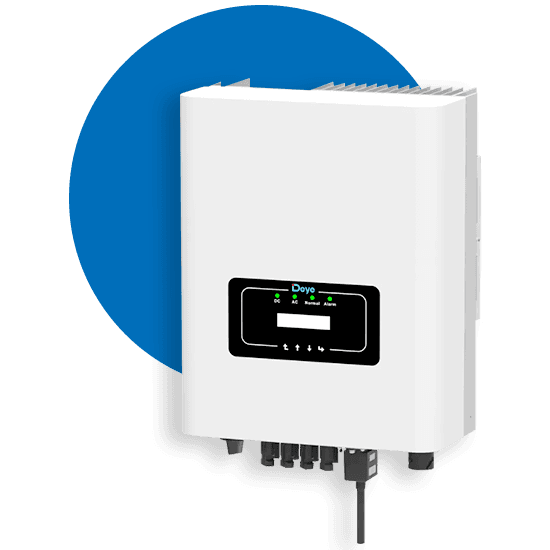
Deye inverter
About the brand: Ningbo Deye Inverter Technology Co., Ltd. was established in 2007 as part of the Deye Group, with registered capital of RMB 300 million. Its manufacturing and testing facilities cover more than 15,000 m², serving the global inverter market.
Technology and efficiency: Deye supplies residential and commercial PV equipment, with the range described here extending from 300 W microinverters to 50 kW hybrid inverters. Its three-level T-type topology and enhanced SVPWM algorithm are described by the manufacturer as improving conversion efficiency by 0.7% compared with traditional SPWM.
Three-phase flexibility: suitable Deye models allow phase-specific settings, helping address unbalanced loads. Capabilities depend on the selected model.
Value: compatible battery options can make storage more affordable. Appropriate Deye systems can also be designed for off-grid sites without an electricity supply.
The range includes hybrid inverters up to 50 kW that can connect to compatible batteries, subject to the model and system design.
Considerations: Deye's monitoring software may be less intuitive than the Huawei or Fronius interfaces; this should be considered when selecting a system.
Our recommendation: Deye is an option for customers seeking competitively priced battery systems or dealing with significant phase imbalance. Its technology, flexibility and cost make it a competitive inverter choice. For commercial projects of at least 50 kW, we select the inverter and storage configuration to suit consumption and equipment compatibility.
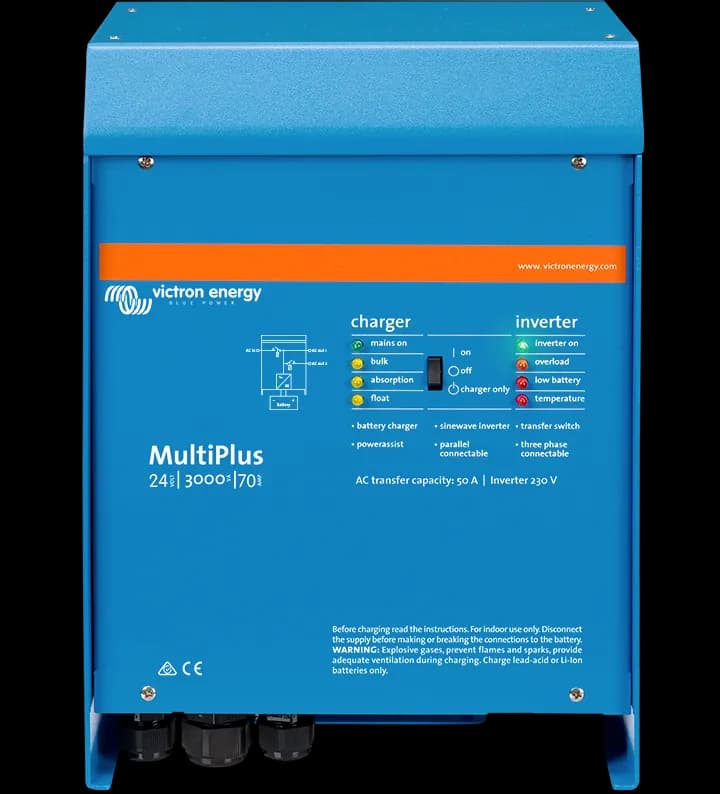
Victron inverter
About the brand: Founded in 1975, Victron Energy is an established supplier of off-grid energy systems for locations without grid power, including inverters and other renewable energy components.
Technology and efficiency: Victron supplies inverters, chargers and energy equipment for residential solar, marine and recreational vehicle applications. Its range supports flexible system design, monitoring and long-term operation.
Remote connectivity: Victron Remote Management (VRM) provides remote monitoring and control, helping users understand their system's performance.
Broad compatibility: Victron equipment can be integrated with a range of compatible systems, including generators and suitable Fronius inverters. Each configuration requires compatibility and design checks.
Considerations: Victron equipment can have a higher initial cost than some alternatives, which should be weighed against the required features.
Our recommendation: We consider Victron for customers seeking a durable off-grid solution with advanced monitoring. It is a premium option where the budget and system requirements support it.
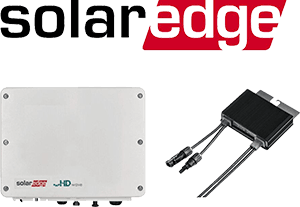
SolarEdge inverter
Inverters with panel-level power optimisers. We prepare an individual quotation for each SolarEdge system.
Batteries
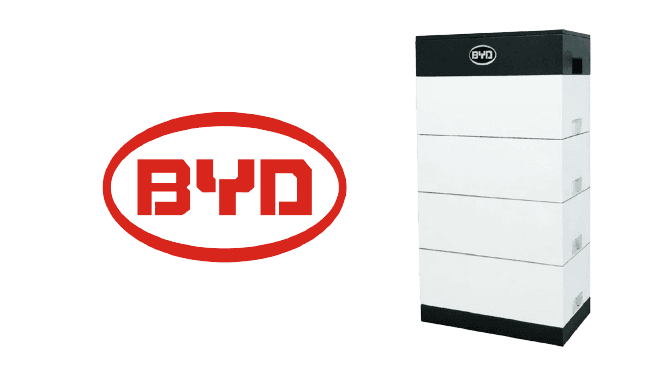
BYD batteries
About the brand: Founded in 1995, BYD Co. Ltd. began as a rechargeable battery manufacturer and expanded into renewable energy products.
Technology and efficiency: BYD's lithium iron phosphate (LiFePO4) batteries are used for residential, commercial and industrial storage. Capacity, power and service life depend on the selected model and operating conditions.
Durability and reliability: BYD batteries are designed for repeated charging and discharging. Cycle life and warranty coverage are model-specific and must be checked separately.
Battery safety: LiFePO4 technology offers thermal and chemical stability. A safe installation still depends on correct equipment selection, protection and operating conditions.
Installation flexibility: BYD storage can be scaled within the selected product range's limits to suit different residential and commercial applications.
Considerations: BYD's initial cost can be higher than some competing battery options.
Our recommendation: We consider BYD for customers seeking quality storage, particularly with a compatible Fronius GEN24 Plus inverter. BYD also works with other inverter manufacturers; the exact pairing must be checked before selection.
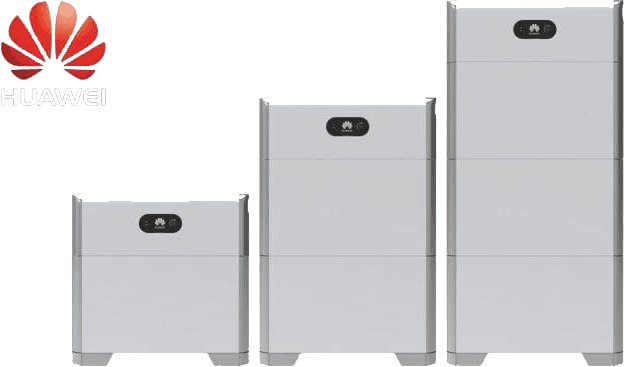
Huawei batteries — Luna
Huawei Luna battery: Luna is Huawei's energy storage range, designed to work within compatible Huawei systems.
Technology and efficiency: Luna uses lithium cells to store electricity for later use. Available energy and power depend on the selected model, capacity and operating conditions.
Service life: Luna batteries are designed for repeated charging and discharging. Consult the exact model's datasheet and warranty certificate for service-life and performance conditions.
Integration and compatibility: Luna integrates with compatible Huawei equipment, subject to the approved model combinations.
Safety and reliability: Huawei incorporates protection functions to address overload and overheating risks. Installation must follow the manufacturer's requirements.
Considerations: The configuration described here provides single-phase backup and uses compatible Huawei inverters. Backup capability must be confirmed for the exact models; it varies across the range.
Our recommendation: We consider Huawei Luna for suitable systems requiring integrated battery storage, with backup and compatibility confirmed during design.
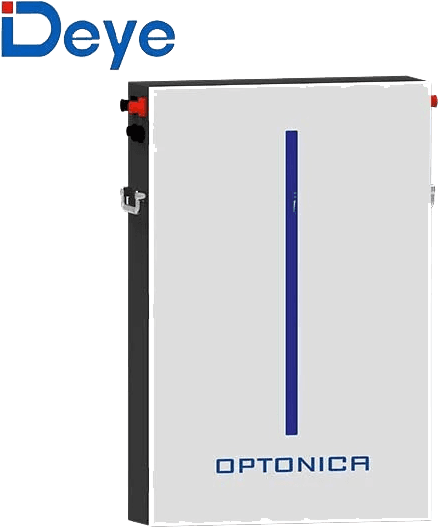
Deye batteries
About Deye and its batteries: Deye supplies inverters and battery energy storage products, drawing on its experience in renewable energy equipment.
Technology and efficiency: Deye lithium batteries are designed for integration with compatible solar systems, storing energy for later use. Capacity, power and efficiency depend on the selected model.
Long-term performance: Deye batteries are designed for repeated charging and discharging. Model-specific cycle figures describe technical test conditions and must not be confused with warranty coverage.
System integration: Deye batteries are designed to integrate with compatible Deye inverters and other approved system components.
Competitive cost: Deye offers storage options for projects seeking a balance of equipment quality and affordability.
Considerations: Deye's battery range may be less familiar to some customers than longer-established battery brands.
Our recommendation: We consider Deye for reliable, cost-conscious storage where the selected battery and inverter meet the project's technical requirements.
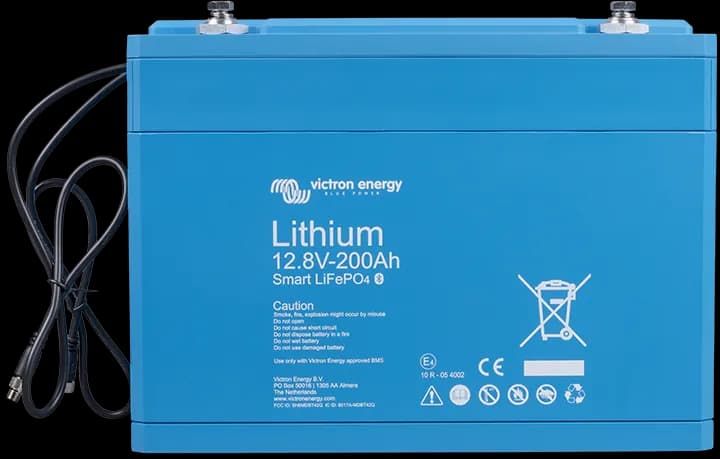
Victron batteries
Victron Energy storage solutions for compatible Victron inverters and off-grid systems. Request a tailored quotation.
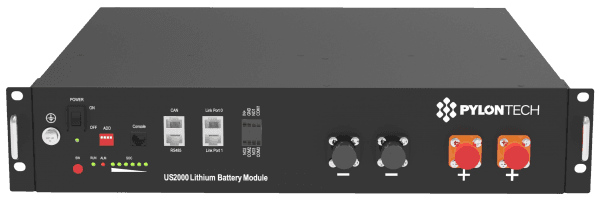
Pylontech batteries
Pylontech lithium batteries are compatible with a range of approved inverters. Request a tailored quotation and model compatibility check.
Mounting structures
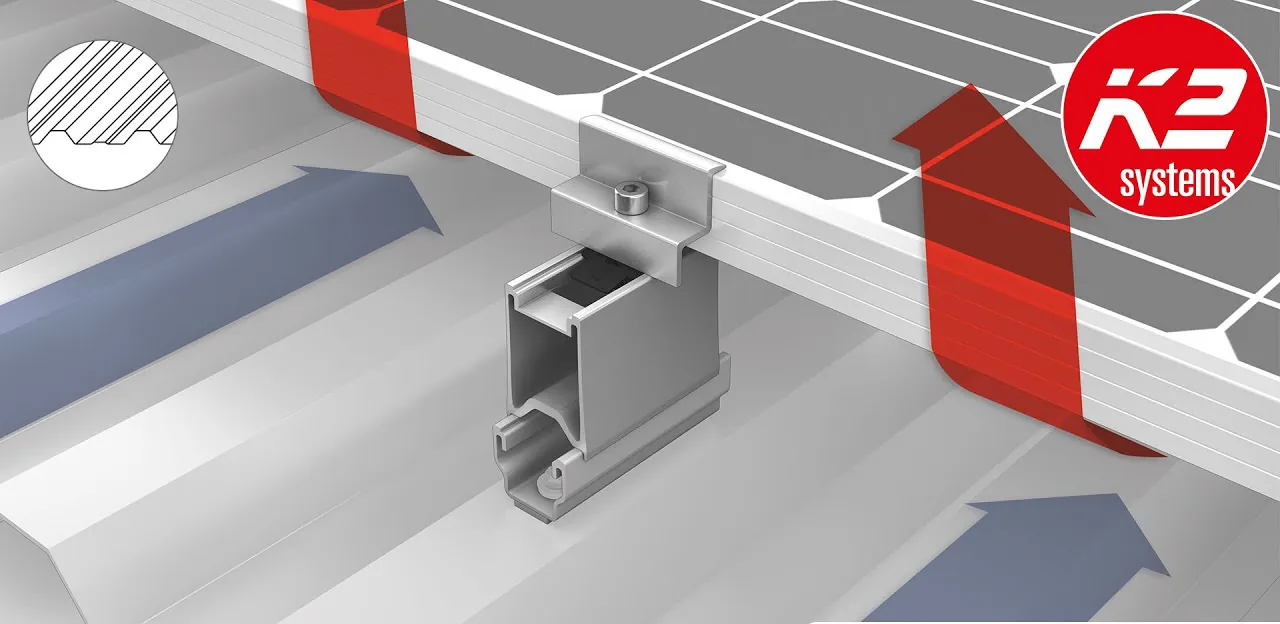
K2 Systems mounting structure
About the brand: K2 Systems is a German-founded company specialising in the development and manufacture of PV mounting systems for the solar industry.
Technology and efficiency: K2 Systems uses quality materials and engineered mounting designs to support stability, durability and efficient installation.
German engineering: K2 Systems develops mounting products with the precision associated with German engineering. Ongoing development: K2 Systems invests in research and development to improve existing products and introduce new mounting solutions. Versatility: K2 Systems offers mounting solutions for a variety of roof types and structures, subject to project-specific selection. Dedicated design software: K2 Systems provides dedicated software for planning its PV mounting structures.
Considerations: K2 Systems mounting can have a higher initial cost than some alternatives.
Our recommendation: We consider K2 Systems for durable mounting, particularly on metal and flat roofs. Its tiled-roof options are also assessed against the roof and project requirements.
How much does it cost?
We calculate a separate quotation for each project, reflecting its complexity, scope and site conditions.
100 kW PV system, including installation on metal roofing
P-type monocrystalline panels
Canadian Solar / LONGi / JA Solar
EUR 603/kW
excluding VAT — PV system including installation
- ✓Manufacturer's panel product warranty — 12 years, subject to selected model
- ✓Performance warranty — 25 years, subject to selected model
N-type monocrystalline panels
Trina / Jinko / AIKO
EUR 630/kW
excluding VAT — PV system including installation
- ✓Manufacturer's panel product warranty — 15 years, subject to selected model
- ✓Performance warranty — 30 years, subject to selected model
The other components are the same for both options:
- 1Huawei inverter — 10-year warranty, with paid extension options up to 20 years where available for the selected model
- 2Huawei smart meter
- 3Premium K2 Systems mounting for metal roofs — 10-year warranty under the applicable terms
- 4Premium Lapp cable specification for this offer; final cable and connector selection confirmed in the project design
- 5Premium protection boards
- 6Installation — included
- 7Transport — included
- 8Measurement of the existing earth electrode — included at no charge
- 9Prosumer documentation — included at no charge
Optional additions, quoted separately:
- ✓Panel-level optimisers
- ✓Battery storage
- ✓EV charging station
- ✓Earth electrode if the existing installation does not meet applicable ANRE requirements
For Fronius, SolarEdge, Deye, Enphase or Victron inverters, we prepare a tailored quotation for each customer.
How long does it take? 10 working days.
For systems up to 100 kW, the installation schedule described in this offer is 10 working days from receipt of the first advance payment. Site readiness and the agreed project schedule must be confirmed.
From the first call to prosumer status, in 12 steps
Initial phone consultation
The customer sends consumption data, site photographs and the project address
We send the quotation
Quotation acceptance
Site visit and discussion with the customer
Contract signing and first advance invoice for 50% of the contract value
Delivery of the main equipment — panels, inverter and batteries — and second advance invoice for 40% of the total contract value
PV system installation
Submission of prosumer documentation, followed by the file registration number being sent to the customer
Payment of the final 10% of the contract value
The distribution operator installs a new meter if needed, then issues the prosumer approval
Free monitoring for two years for individuals and one year for companies
Choose commercial solar
We size the system for your consumption profile, usable space and connection limits, then assess estimated generation and self-consumption before investment.
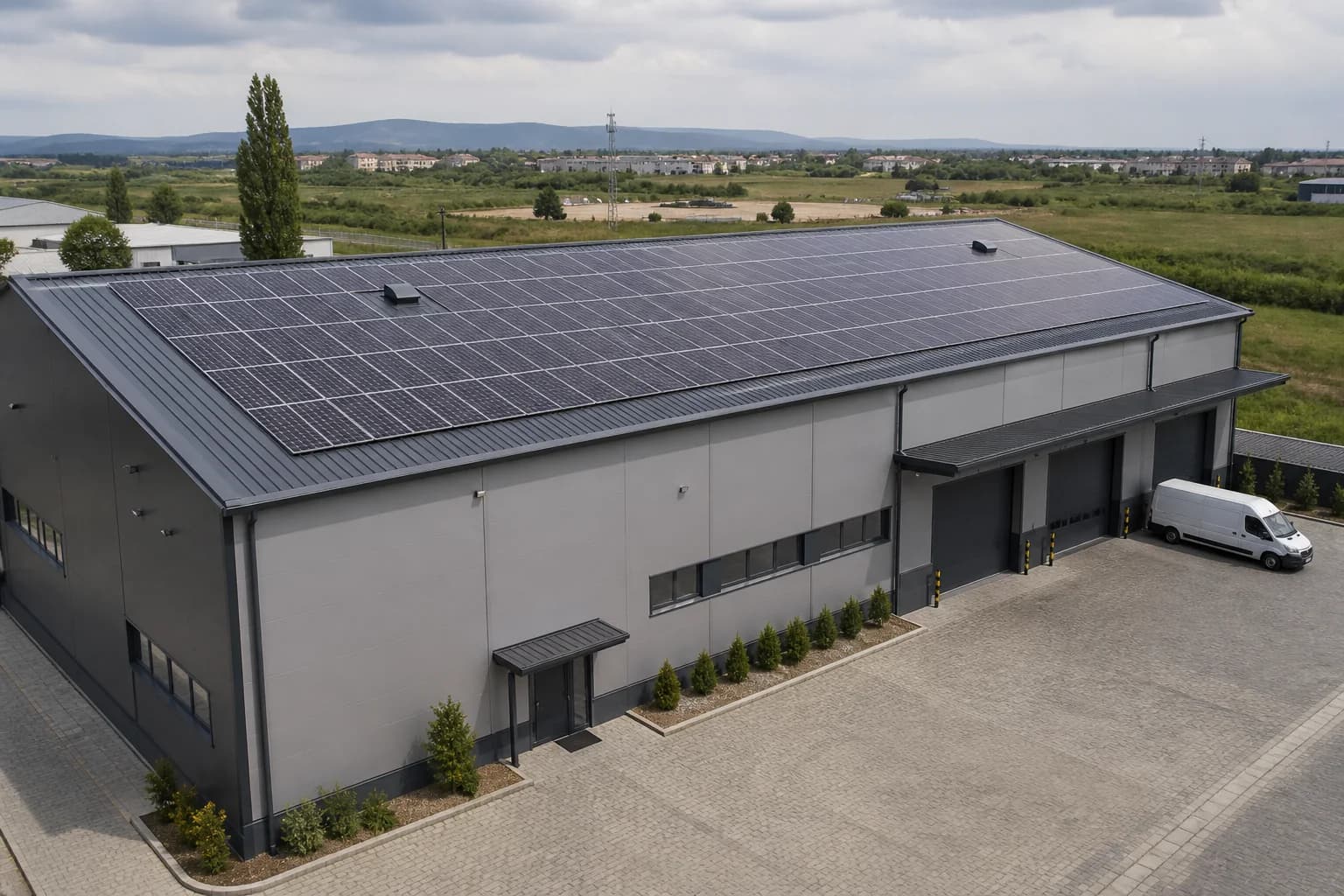
Solar Panels for Businesses: Supporting Your Sustainability Goals
Business solar can support lower energy costs and a responsible company image. As sustainability becomes more important to businesses, on-site generation offers a way to reduce carbon emissions and part of the electricity purchased from the grid. The financial outcome depends on the project and consumption profile.
Bringing Solar Power to Your Business
Energy Costs and Environmental Responsibility
A business PV system can reduce electricity costs while supporting the company's environmental commitments.
Partnerships, Skills and Certification
Romanian-German Foundation Partnership and Specialist Training
Our work with the Romanian-German Foundation and accredited electrician training supports skills development in renewable energy and the wider electrical industry.
Fronius Partnership and Inverter Service Expertise
We are a service partner for Fronius inverters. This collaboration supports our technical expertise and ability to provide ongoing service.
ANRE Certification for Design and Installation
Nectaria holds C1A and C2A certification from Romania's National Energy Regulatory Authority (ANRE) for the applicable design and installation scope. Work is carried out under the relevant technical requirements.
Business Solar with Nectaria Solar
PV systems provide on-site renewable electricity and can offer several practical benefits to a business. The following areas should be assessed for each project:
Lower Energy Costs
Business solar systems can reduce electricity costs and free resources for other investments. Savings depend on the system and consumption profile.
More Predictable Energy Costs
On-site solar can reduce exposure to electricity price changes by supplying part of the business's demand.
A Responsible Brand
Adopting solar energy demonstrates a business's commitment to the environment and sustainability, including to customers who value these issues.
Communicating Sustainability
Solar investment can support a company's sustainability communications with customers, media and investors.
A Lower Carbon Footprint
Solar electricity can reduce carbon emissions and support a business's climate objectives.
Greater Energy Independence
Solar reduces reliance on imported electricity. Resilience during outages requires a specifically designed backup system and compatible equipment.
Potential Property Value
A PV installation may make commercial premises more attractive to buyers or tenants, depending on its performance and the property's characteristics.
Incentives and Grants
Tax incentives and grant programmes may support business solar projects where available. Eligibility, funding and terms must be checked for the relevant programme.
Reputation and Recruitment
A visible commitment to sustainability can help attract professionals who share those values.
Community and Sustainable Development
Business solar projects can support regional sustainable development and environmental responsibility.
Reliable Customer Service
Questions and Technical Support
Our FAQ and contact page make it straightforward to reach us. We provide answers and support throughout the project.
Solar can support a business's energy strategy and environmental commitments. With technical assessment, clear explanations and ongoing service, we help customers decide which configuration suits their premises and operations.
Our approach
A good system starts with generation matched to consumption, careful installation and service that remains available.
Let's put the sun to work.
Start with an indicative configuration or send us your project details directly.